

In today’s fast-paced world, Digital Marketing has revolutionized the way businesses reach their target audience. With the power of the internet and cutting-edge digital technologies, marketers can now connect with potential customers on a global scale. If you’re looking to embark on an exciting and rewarding career, digital marketing is a realm of endless opportunities.
Are you ready to level up your digital marketing game? Whether you’re a seasoned professional or just starting in the industry, mastering the art of digital marketing is crucial for success. In this article, we’ve curated a list of essential digital marketing interview questions that will not only impress your potential employers but also equip you with the knowledge to advance your career.
From the fundamentals of Google Analytics and SEO analysis to the intricacies of social media management and email marketing, these interview questions will cover a wide spectrum of digital marketing expertise. Be prepared to showcase your skills in optimizing website performance, crafting compelling content, and executing data-driven marketing strategies.
As the demand for digital marketing professionals continues to soar, it’s essential to stand out from the competition. By familiarizing yourself with these essential interview questions, you’ll be one step closer to seizing the incredible opportunities that the world of digital marketing has to offer.
Get ready to shine in your next digital marketing interview and embark on a journey towards a highly lucrative and fulfilling career. Let’s dive into the world of digital marketing and unlock your potential!
Unlock Your Digital Marketing Potential: The Most Asked Interview Questions Revealed!
-
Why has Digital Marketing grown to be this huge compared to offline marketing?
- Digital marketing has grown significantly due to its ability to reach a larger audience, target specific demographics, provide real-time data and analytics, and offer cost-effective advertising options compared to traditional offline marketing.
-
Differentiate between direct marketing and branding?
- Direct marketing focuses on personalized communication and encourages immediate action, aiming to elicit a response or sale. Branding, on the other hand, aims to create a strong brand identity, recognition, and emotional connection with the audience to foster long-term loyalty.
-
What are some of the popular digital marketing tools?
- Some popular digital marketing tools include Google Analytics, Mailchimp, SEMrush, Hootsuite, Buffer, and Canva.
-
List the most popular local SEO ranking factors.
- The most popular local SEO ranking factors include Google My Business optimization, local citations, online reviews, website localization, and mobile-friendliness.
-
What are the most effective ways to increase traffic to your website?
- Effective ways to increase website traffic include producing high-quality content, utilizing SEO techniques, engaging on social media, running online advertising campaigns, and collaborating with influencers.
-
What would you do to improve the Click-through-rate of your email?
- To improve the Click-through-rate of your email, you can use compelling subject lines, personalized content, clear and prominent CTAs, and optimize email design for mobile devices.
-
How can you make content go viral?
- To make content go viral, focus on creating shareable, relevant, and emotionally engaging content. Utilize social media platforms, influencers, and online communities to spread the content organically.
-
How can you perform A/B testing on your ads?
- Perform A/B testing on your ads by creating two or more variations of an ad, changing one element at a time (e.g., headline, image, CTA), and then analyzing the performance metrics to determine the most effective version.
-
What can you do to improve your conversion rates?
- To improve conversion rates, optimize landing pages, simplify the checkout process, use persuasive CTAs, implement social proof, and provide clear and valuable information about your products or services.
-
How do you respond to negative comments?
- Respond to negative comments by acknowledging the issue, showing empathy, offering a solution, and taking the conversation offline if necessary. Always remain professional and avoid getting defensive.
-
What are some of the popular digital marketing tools?
Here are some popular digital marketing tools:
- Google Analytics: A free analytics platform to track website, social media, video, and app performance, and calculate ROI from advertisements.
- Ahrefs: An excellent tool for backlinks and SEO analysis.
- Mailchimp: An email marketing tool to manage and communicate with clients and consumers from one central location.
- Google Keyword Planner: Helps determine keywords for Search Network campaigns, showing monthly searches and cost to target them.
- Kissmetrics: Comprehensive online analytics software providing website insights and customer engagement data.
- Keyword Discovery: Provides access to a comprehensive keyword index compiled from all search engines, including consumer search keywords and competitors’ search terms.
- SEMrush: A toolkit for web visibility, including SEO, PPC, SMM, Keyword Research, Competitive Research, and content marketing services.
- Buffer App: A social media management application for content creation, customer communication, and social media success tracking.
- AdEspresso: A simple and intuitive Facebook ad management and optimization tool.
-
2023’s Hottest Digital Marketing Trends?
- Short Videos
- Story Telling
- AI Content Tools
- NFTs in Marketing
- Google Discover
- Threads
-
What are the seven P’s of Digital Marketing?
-
Product: Refers to the goods or services that a company offers to its target audience in the digital marketplace.
-
Price: Involves setting competitive and appropriate pricing strategies for the digital products or services.
-
Promotion: Includes all the online marketing efforts and activities to promote the digital products or services to the target audience.
-
Place: Focuses on determining the digital channels and platforms where the products or services will be made available to consumers.
-
People: Refers to understanding and catering to the needs and preferences of the digital consumers to build strong relationships.
-
Process: Involves creating smooth and efficient digital processes, such as online ordering or customer support, to enhance the overall user experience.
-
Physical Evidence: In the context of digital marketing, this refers to the tangible elements or digital assets that support the marketing efforts, such as website design, online reviews, or social media presence.
-
Mastering SEO: Top Digital Marketing Interview Questions to Conquer!
-
Differentiate between Dofollow and Nofollow?
- Dofollow and Nofollow are attributes used in HTML code to instruct search engines how to treat links on a webpage.
-
Dofollow: When a link has the Dofollow attribute, it means search engines are allowed to follow that link and pass link equity or “link juice” to the linked page. This can positively impact the linked page’s search engine rankings.
<a href="https://www.example.com" target="_blank">Visit Example Website</a> -
Nofollow: On the other hand, when a link has the Nofollow attribute, it instructs search engines not to follow that link and not to pass any link equity. Nofollow links do not contribute to the linked page’s search engine rankings but can still drive traffic to the linked page if clicked by users. Nofollow attributes are often used for sponsored or user-generated content to avoid potential penalties from search engines for unnatural link building.
<a href="https://www.example.com" target="_blank" rel="nofollow">Visit Example Website</a>
-
- Dofollow and Nofollow are attributes used in HTML code to instruct search engines how to treat links on a webpage.
-
What is a 301 redirect? How different is it from a 302 Redirect?
- A 301 redirect is a permanent redirect used in web development to indicate that a page or URL has permanently moved to a new location. It is a way to inform search engines and browsers that the old URL should be replaced by the new one in their indexes. This helps preserve search engine rankings and direct users to the correct page seamlessly.
- On the other hand, a 302 redirect is a temporary redirect used to indicate that a page or URL has temporarily moved to a new location. Unlike a 301 redirect, search engines and browsers understand that the change is temporary, so they keep the original URL in their indexes.
-
Why are backlinks important in SEO?
-
Backlinks are crucial in SEO because they serve as a vote of confidence and credibility from other websites. When a reputable website links to your content, search engines view it as a signal that your content is valuable and relevant. This, in turn, can positively impact your search engine rankings and visibility.
-
High-quality backlinks from authoritative and relevant websites can significantly enhance your website’s domain authority and trustworthiness in the eyes of search engines. They act as pathways for search engine crawlers to discover and index your content, which can lead to higher organic traffic and better rankings in search engine results.
-
However, it’s essential to focus on acquiring natural and relevant backlinks rather than engaging in manipulative practices, as search engines are constantly refining their algorithms to identify and penalize spammy link-building tactics. Building a strong and diverse backlink profile through valuable content and genuine relationships with other websites remains a fundamental aspect of successful SEO strategies.
-
- What are the best practices to rank your YouTube videos?
To improve the ranking and visibility of your YouTube videos, consider implementing these best practices:-
Keyword Research: Conduct thorough keyword research to identify relevant and high-traffic keywords for your video’s title, description, and tags.
-
Compelling Titles: Craft attention-grabbing and keyword-rich titles that accurately represent the content of your video.
-
Engaging Descriptions: Write detailed and keyword-optimized descriptions, providing context and encouraging viewers to watch the entire video.
-
Video Tags: Utilize relevant and specific tags to help YouTube understand the content and context of your video.
-
Eye-catching Thumbnails: Create custom and visually appealing thumbnails that entice viewers to click on your video.
-
Video Length: Aim for engaging videos that keep viewers interested throughout. Longer watch times can positively impact rankings.
-
Quality Content: Focus on creating high-quality, informative, and entertaining videos that resonate with your target audience.
-
Audience Engagement: Encourage viewers to like, comment, share, and subscribe to your channel. High engagement signals value to YouTube’s algorithm.
-
Playlists and End Screens: Organize your videos into playlists and utilize end screens to keep viewers engaged with your content.
-
Cross-Promotion: Promote your videos on social media, your website, and collaborate with other YouTubers to expand your reach.
-
Consistency: Maintain a regular upload schedule to keep your audience engaged and improve video performance over time.
-
Analyze Metrics: Use YouTube Analytics to understand viewer behavior, identify trends, and optimize future content based on data.
-
-
What is Mobile-First Indexing?
-
- Mobile-First Indexing is a method used by search engines, primarily Google, to rank and index web pages based on the mobile version of a website’s content as the primary source. In the past, search engines primarily used the desktop version of websites for indexing and ranking. However, with the significant increase in mobile usage, Google decided to shift to Mobile-First Indexing to prioritize the mobile experience of users.
- Under Mobile-First Indexing, Google’s crawlers primarily use the mobile version of a website’s content to determine its relevance and ranking in search results, even for users searching on desktop devices. This means that if a website has both a desktop and mobile version, the mobile version’s content and performance will be the primary factor considered by Google when indexing and ranking that site.
- For website owners and webmasters, this shift to Mobile-First Indexing highlights the importance of having a mobile-friendly and responsive website. Websites that are not mobile-friendly may experience lower rankings in search results, leading to potential loss of organic traffic and visibility. Therefore, optimizing websites for mobile devices has become essential for a successful SEO strategy in today’s mobile-centric digital landscape.
-
How you can improve website speed?
- Optimize and compress images and multimedia files.
- Minimize HTTP requests by combining CSS and JavaScript files.
- Enable browser caching to store website data locally.
- Use a content delivery network (CDN) to distribute content across multiple servers.
- Minify CSS, JavaScript, and HTML to reduce file sizes.
- Use lazy loading for images and videos to load them only when needed.
- Reduce server response time by optimizing server configurations and hardware.
- Enable GZIP compression to reduce file sizes during data transfer.
- Use a fast and reliable web hosting service.
- Optimize CSS and JavaScript delivery by using asynchronous loading.
- Implement AMP (Accelerated Mobile Pages) for faster mobile loading times.
-
When should Short Tail and Long Tail keywords be targeted?
- Short Tail keywords are best for driving many visitors to your website, while Long Tail keywords are ideal for targeting specific pages like product pages and articles also Long Tail Keywords are more specific and describing that drives conversion and easy to rank due to low competition.
-
What is CTR, how do you calculate it, and why is a high CTR important?
- CTR stands for Click-Through Rate, which is the percentage of people who click on a specific link or ad after seeing it. To calculate CTR, divide the number of clicks by the number of impressions (views) and multiply by 100.
Formula: CTR = (Number of Clicks / Number of Impressions) * 100 - A high CTR is essential because it indicates that your content or ads are engaging and relevant to your audience. It shows that a significant portion of viewers are taking action, clicking through to your website or landing page. A high CTR can lead to improved search engine rankings, lower advertising costs, and increased conversions, ultimately driving more valuable traffic to your website.
- CTR stands for Click-Through Rate, which is the percentage of people who click on a specific link or ad after seeing it. To calculate CTR, divide the number of clicks by the number of impressions (views) and multiply by 100.
Cracking the SEM/PPC Interview: Must-Know Digital Marketing Questions!
-
What Google AdWords?
-
- Google AdWords, now known as Google Ads, is an online advertising platform developed by Google that allows businesses to create and run ads on Google’s search engine and partner websites. It operates on a pay-per-click (PPC) model, where advertisers bid on specific keywords to have their ads displayed to relevant users when they search for those keywords. Advertisers are only charged when someone clicks on their ad, making it a cost-effective and targeted advertising solution.
-
Can you tell us a few Google AdWords Ad Extensions names?
- Site-link extensions
- Call Extensions: Allows users to call your business directly from the ad.
- Location Extensions: Displays your business address with the ad.
- Callout Extensions: Additional text to highlight key selling points.
- Structured Snippet Extensions: Showcases specific aspects or categories of your products/services.
- App Extensions: Provides a link to download your mobile app.
- Price Extensions: Displays a list of products or services with their respective prices.
- Promotion Extensions: Highlights special offers or promotions.
-
What is quality score in google ads?
-
- Quality Score in Google Ads is a metric that measures the relevance and quality of your keywords, ads, and landing pages. It plays a crucial role in determining the position of your ads and the cost-per-click (CPC). A higher Quality Score indicates that your ads are more relevant to users, leading to better ad rankings and lower costs. It is essential to optimize your ad elements to achieve a higher Quality Score and improve the overall performance of your Google Ads campaigns.
-
What is RLSA, and how does it work?
- RLSA stands for Re-marketing Lists for Search Ads. It is a feature in Google Ads that allows advertisers to target previous website visitors with customized search ads. By creating re-marketing lists based on user interactions, RLSA enables advertisers to adjust bids, tailor ad copy, and target specific keywords for those users when they perform new searches on Google. This helps reconnect with interested users, increase ad relevance, and boost conversion opportunities.
- The Steps to create RLSA List:
- Sign in to your Google Ads account: Access your Google Ads dashboard by visiting ads.google.com and sign in with your Google account.
- Click on “Tools & Settings”: Navigate to the top right corner of the screen and click on the wrench icon (Tools & Settings).
- Select “Audience Manager”: Under the “Shared Library” section, choose “Audience Manager.”
- Click on “Audience Sources”: In the left sidebar, click on “Audience Sources” to access the options for creating re-marketing lists.
- Create a new re-marketing list: Click on the “+“, then select “Website Visitors” to create a list of users who have visited your website.
- Define your audience criteria: Set the parameters for your re-marketing list based on website visitors’ behavior, such as specific pages visited, actions taken, or visit duration. Customize the list based on your campaign goals.
- Set membership duration: Choose how long you want a user to stay on the list after their last interaction with your website. This duration can range from 1 day to 540 days.
- Save your list: After configuring the list settings, click “Save” to create the re-marketing list.
- Apply the list to your search campaign: Now that you have your re-marketing list, navigate to your search campaign, and click on the “Audiences” tab. Add the re-marketing list you just created to the campaign.
- Customize your bids and ads: Adjust your bid adjustments and tailor your ad copy to specifically target users on your re-marketing list when they perform new searches.
- The Steps to create RLSA List:
- RLSA stands for Re-marketing Lists for Search Ads. It is a feature in Google Ads that allows advertisers to target previous website visitors with customized search ads. By creating re-marketing lists based on user interactions, RLSA enables advertisers to adjust bids, tailor ad copy, and target specific keywords for those users when they perform new searches on Google. This helps reconnect with interested users, increase ad relevance, and boost conversion opportunities.
-
What are some of the reasons for ads may rejected by Google?
- Violation of advertising policies.
- Misleading or deceptive content.
- Inappropriate or offensive language or images.
- Use of restricted or prohibited products/services.
- Landing page issues, such as broken links or irrelevant content.
- Insufficient or misleading disclaimers.
- Non-compliance with legal requirements or age restrictions.
- Violation of copyright or trademark rights.
- Low-quality or irrelevant ad content.
- Overuse of capitalization, symbols, or excessive punctuation.
-
How many keyword match types are available in Google Ads?
- Broad Match: Ads may show for searches that include misspellings, synonyms, related searches, and other variations of the target keyword.
- Examples:
- Keyword: shoes
- Example Searches Triggering the Ad: shoes, buy shoes, footwear, sneakers, running shoes
- Examples:
- Modified Broad Match: Allows you to specify certain keywords with a “+” symbol, ensuring that the ad shows only when those keywords are included in the search.
- Examples:
- Keyword: +blue +dress
- Example Searches Triggering the Ad: blue dress, buy blue dress, beautiful blue dress, dress in blue color
- Examples:
- Phrase Match: The ad will appear for searches that include the exact keyword phrase or close variations with additional words before or after it.
- Examples:
- Keyword: “pet grooming”
- Example Searches Triggering the Ad: pet grooming, best pet grooming, pet grooming services, professional pet grooming
- Examples:
- Exact Match: The ad will display only for searches that exactly match the target keyword or close variations with no additional words.
- Examples:
- Keyword: [car rental]
- Example Searches Triggering the Ad: car rental, rent a car, car rental service, cheap car rental
- Examples:
- Broad Match: Ads may show for searches that include misspellings, synonyms, related searches, and other variations of the target keyword.
-
What types of keyword bidding available in Google ads?
- Manual Cost-Per-Click (CPC) Bidding: This is the default bidding option, where advertisers manually set the maximum amount they are willing to pay for each click on their ads. It provides full control over the bid amounts for individual keywords.
- Enhanced Cost-Per-Click (ECPC) Bidding: ECPC is a semi-automated bidding option that allows Google to adjust your manual bids in real-time based on historical data and the likelihood of conversion. It increases or decreases bids for specific clicks that are more likely to lead to conversions.
- Target Cost-Per-Acquisition (CPA) Bidding: With Target CPA bidding, advertisers set a target cost per acquisition or conversion. Google’s algorithm then automatically adjusts bids to help achieve the desired conversion goal within the specified cost per acquisition.
- Target Return on Ad Spend (ROAS) Bidding: In Target ROAS bidding, advertisers set a specific ROAS target, and Google’s algorithm automatically adjusts bids to maximize revenue based on the target ROAS.
- Maximize Conversions Bidding: This automated bidding strategy aims to get the maximum number of conversions within the specified budget. Google automatically adjusts bids to achieve the best possible results.
- Maximize Clicks Bidding: This strategy is designed to get the most clicks possible within the set budget. Google automatically adjusts bids to drive as much traffic as possible to the website.
- Target Search Page Location Bidding: With this bidding option, advertisers set a target for their ad’s position on the search results page (e.g., top of the page or first page). Google adjusts bids to help achieve the desired ad position.
-
What is CPV, CPM, CPC?
- CPV – Cost Per View: CPV is a bidding model where advertisers pay for each video ad view. It is commonly used in video advertising, where advertisers are charged when a user watches a specific portion of their video ad (e.g., 30 seconds or more).
- CPM – Cost Per Mille (Cost Per Thousand Impressions): CPM is a bidding model where advertisers pay for every 1,000 ad impressions, regardless of whether the ad is clicked or not. It is commonly used in display advertising, and advertisers pay a fixed rate per 1,000 ad views.
- CPC – Cost Per Click: CPC is a bidding model where advertisers pay for each click on their ad. This model is prevalent in search engine advertising (e.g., Google Ads) and pay-per-click (PPC) campaigns. Advertisers bid on keywords, and they are charged only when a user clicks on their ad.
-
What is the quality score in Google Ads?
- The Quality Score in Google Ads is a metric used to measure the relevance and quality of your keywords, ad copy, and landing pages. It plays a crucial role in determining your ad’s position in the search results and the cost per click (CPC) you pay for your ads. A higher Quality Score indicates that your ads are relevant and valuable to users, leading to better ad rankings and lower CPCs.
- Click-Through Rate (CTR): The percentage of users who click on your ad after seeing it.
- Ad Relevance: How relevant your ad is to the user’s search query.
- Landing Page Experience: The relevance and user-friendliness of the landing page to which the ad leads.
- Ad Format and Extensions: The use of ad extensions and other formats to enhance ad visibility and engagement.
- To improve your Quality Score, focus on creating relevant and compelling ads, using targeted keywords, and ensuring a seamless and relevant landing page experience for users. A high Quality Score can lead to better ad performance, higher ad positions, and potentially lower CPCs, ultimately maximizing the effectiveness of your Google Ads campaigns.
- The Quality Score in Google Ads is a metric used to measure the relevance and quality of your keywords, ad copy, and landing pages. It plays a crucial role in determining your ad’s position in the search results and the cost per click (CPC) you pay for your ads. A higher Quality Score indicates that your ads are relevant and valuable to users, leading to better ad rankings and lower CPCs.
-
What are the key characteristics of an effective PPC landing page?
- Relevance: The landing page should be directly related to the ad’s content and the user’s search query, ensuring a seamless and relevant experience.
- Clear Call-to-Action (CTA): The page should have a clear and prominent CTA that guides users to take the desired action, such as making a purchase, signing up, or requesting more information.
- Mobile-Friendly Design: The landing page should be optimized for mobile devices to accommodate users on various devices and improve the overall user experience.
- Fast Loading Speed: A fast-loading page reduces bounce rates and enhances user engagement. Aim for quick loading times to keep users on the page.
- Minimal Distractions: Avoid clutter and unnecessary elements that can distract users from the main CTA and message.
- Compelling Headline and Copy: Use persuasive and concise headlines and copy to communicate the value proposition and benefits clearly.
- Visual Appeal: Incorporate high-quality and relevant images or videos that support the content and engage users.
- Trust Elements: Include trust indicators such as customer reviews, testimonials, security seals, or guarantees to build credibility.
- A/B Testing: Regularly conduct A/B tests to optimize the page’s elements and improve conversion rates over time.
- Tracking and Analytics: Implement tracking codes and analytics tools to monitor user behavior and conversion metrics, enabling data-driven improvements.
-
How many ad formats are available in Google Ads?
- Text Ads
- Image Ads
- Video Ads
- Responsive Ads
- App Promotion Ads
- Call-Only Ads
- Shopping Ads
- Showcase Shopping Ads
- Discovery Ads
- App Engagement Ads
- Local Campaign Ads
- Smart Campaign Ads
- Gmail Ads
- Image Carousel Ads
Social Media Marketing Interview Questions: Get Ready to Ace Your Digital Marketing Interview!
-
How to respond to the negative comments?
- Stay calm and composed; avoid reacting emotionally.
- Acknowledge the comment and show empathy.
- Respond promptly to address the concern or issue.
- Offer a sincere apology if necessary.
- Provide a solution or offer to resolve the problem privately.
- Avoid engaging in arguments; keep the conversation constructive.
- Use a polite and professional tone throughout the response.
- Thank the commenter for their feedback and for bringing the issue to your attention.
- Take the conversation offline if needed by asking the commenter to direct message or email you.
- Monitor the conversation and follow up after resolving the issue to ensure customer satisfaction.
-
Provide an example of a social media campaign that achieved success?
- “Master Ji – A Teacher’s Day Tribute” by EduConnect

- EduConnect, an online education platform, launched a heartwarming digital marketing campaign to honor and celebrate the unsung heroes, teachers, on Teacher’s Day. Through a series of emotionally touching videos, they showcased the impact teachers have on their students’ lives. The campaign went viral on social media, with audiences sharing their heartfelt stories and expressing gratitude to their teachers.
- “Voice of Hunger” by Swiggy

- Swiggy, a leading food delivery platform, initiated a powerful digital marketing campaign called “Hunger Heroes.” The campaign shed light on the issue of hunger in India by sharing real-life stories of individuals facing food scarcity. The emotional videos struck a chord with the audience, prompting them to engage and support various hunger relief initiatives, turning Swiggy into more than just a food delivery service.
- “Fuelled By Love‘ by British Airways

- British Airways launched an uplifting digital marketing campaign titled “Skybound Love” to promote its new non-stop flight from Delhi to London. The heart-touching series of videos showcased a couple’s emotional journey of reunion after being apart for a long time. The campaign tugged at the heartstrings of viewers, generating immense social media buzz and excitement for the new flight route.
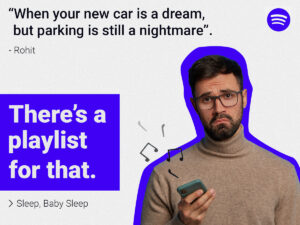
- “There’s a Playlist for That” by Spotify India
- Spotify India rolled out an engaging digital marketing campaign, “Playlist Matchmaker,” highlighting its personalized playlists feature. Through a series of captivating videos, the campaign demonstrated how Spotify could curate the perfect playlist for any occasion. Viewers were inspired to explore and share their unique playlists, amplifying the reach and appeal of Spotify’s personalized music experience.
- “Not Everyone Gets It” by Cred
- Cred, a credit card rewards app, launched a witty and relatable digital marketing campaign targeting millennials. Titled “Not Everyone Gets It,” the campaign showcased how Cred could help young adults save money and earn rewards while responsibly managing their credit cards. The humorous and insightful videos resonated with the audience, boosting brand awareness and user engagement.
- “Master Ji – A Teacher’s Day Tribute” by EduConnect
These original examples demonstrate how creativity, emotion, and relevance play pivotal roles in driving the success of digital marketing campaigns. By connecting with their target audiences on a deeper level and leveraging the power of digital platforms, these brands were able to create impactful campaigns that left a lasting impression.
-
How many Types of Facebook Ads formats available?
-
Image Ads: These ads consist of a single image and some accompanying text.
-
Video Ads: Video ads use videos to showcase products, services, or brand stories.
-
Carousel Ads: Carousel ads allow multiple images or videos within a single ad, showcasing different products or features.
-
Slideshow Ads: Slideshow ads are lightweight video ads created from a series of images.
-
Collection Ads: Collection ads feature a primary image or video along with product images below, enabling a more immersive shopping experience.
-
-
How can you leverage the holiday season for social media marketing?
-
Festive Content: Create engaging and festive content that aligns with the holiday theme. Use holiday-related graphics, colors, and themes to attract attention and connect with your audience.
-
Holiday Offers and Promotions: Offer exclusive holiday deals, discounts, and promotions to encourage social media users to engage with your brand and make purchases.
-
Holiday Hashtags: Use popular holiday hashtags to increase visibility and reach on social media platforms. Create branded holiday hashtags specific to your campaign to encourage user-generated content.
-
Holiday Contests and Giveaways: Organize holiday-themed contests and giveaways to drive user participation and increase brand engagement.
-
Shareable Content: Create shareable content such as holiday tips, gift ideas, and DIY projects that your audience will be inclined to share with their friends and followers.
-
Embrace Storytelling: Share heartwarming and emotional stories that resonate with the holiday spirit. Highlight your brand’s values and community involvement during the festive season.
-
Live Videos and Q&A Sessions: Conduct live videos and Q&A sessions to interact directly with your audience and address their holiday-related queries and concerns.
-
Collaborations and Influencer Marketing: Partner with influencers or collaborate with other brands to extend your reach and tap into new audiences during the holiday season.
-
Countdown Campaigns: Create anticipation and excitement with countdown campaigns leading up to special holiday events, launches, or sales.
-
Holiday-themed Profile and Cover Photos: Update your social media profiles and cover photos with holiday-themed visuals to create a festive atmosphere.
-
-
Types of Hooks in Marketing?
-
Emotional Hook: Evokes strong emotions to connect with the audience on a personal level.
- Example: An ad showing a daughter surprising her father with a thoughtful gift on his birthday, highlighting the bond between parents and children.
-
Storytelling Hook: Uses compelling narratives to engage and captivate the audience.
- Example: A brand narrating the inspiring journey of a local entrepreneur who started a small business and achieved success through their support.
-
Curiosity Hook: Creates intrigue and curiosity, prompting the audience to seek more information.
- Example: A teaser campaign for an upcoming movie with mysterious posters and cryptic messages, intriguing the audience to discover more about the plot.
-
Fear of Missing Out (FOMO) Hook: Creates a sense of urgency and scarcity to encourage immediate action.
- Example: “Limited seats available! Register now for the exclusive webinar with industry experts.”
-
Social Proof Hook: Uses testimonials, reviews, or social validation to build trust and credibility.
- Example: “Trusted by 1 million Indian families for over 30 years, our product is India’s favorite brand for health supplements.”
-
Benefit Hook: Highlights the benefits or solutions offered by a product or service.
- Example: “Get radiant skin in just 7 days with our Ayurvedic skincare range, crafted for Indian skin types.”
-
Humor Hook: Uses humor to entertain and engage the audience.
- Example: A humorous ad showcasing a family’s comical experience during a road trip, featuring popular Indian comedians.
-
Celebrity or Influencer Hook: Involves the endorsement or involvement of a well-known figure to attract attention.
- Example: A Bollywood celebrity endorsing a new clothing line for an Indian fashion brand.
-
Time-sensitive Hook: Offers limited-time deals or promotions to drive immediate action.
- Example: “Hurry! Early bird discount ends tomorrow on event tickets. Book now and save!”
-
Personalization Hook: Tailors the marketing message to the specific needs and preferences of the individual audience members.
- Example: A personalized email from a travel company, recommending customized holiday packages based on the recipient’s travel preferences and interests.
-
-
How to make content go viral?
-
Create Remarkable Content: Focus on producing high-quality, unique, and engaging content that stands out from the crowd.
-
Emotionally Connect: Craft content that evokes strong emotions like joy, surprise, or awe, as emotional content is more likely to be shared.
-
Utilize Visuals: Incorporate eye-catching images, videos, or infographics to make your content more shareable and appealing.
-
Understand Your Audience: Know your target audience and tailor your content to their interests and preferences.
-
Utilize Trending Topics: Capitalize on current trends and popular topics to increase the relevancy and shareability of your content.
-
Leverage Influencers: Partner with influencers or key opinion leaders who can amplify your content to a broader audience.
-
Optimize for Sharing: Ensure your content is easy to share across various platforms by adding social media sharing buttons.
-
Timing Matters: Publish content when your target audience is most active to maximize visibility and engagement.
-
Encourage User Participation: Include interactive elements like quizzes, polls, or challenges to encourage user participation and sharing.
-
Engage with the Audience: Respond to comments, messages, and shares to foster a sense of community and encourage further engagement.
-

Recent Comments